
HAMBURG, GERMANY
Old warehouses, modern architecture, harbour views and my first Korean BBQ experience. Hamburg surprised me with contrasts that somehow belong together.
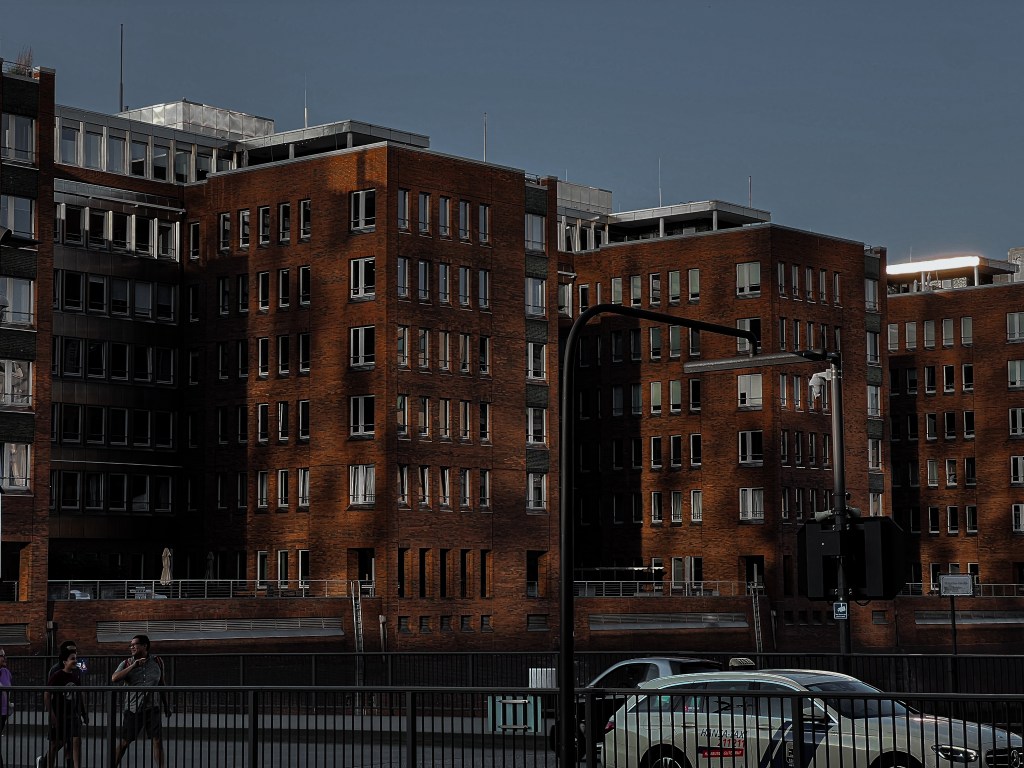
Hamburg felt familiar and surprising at the same time. The city carries its history openly through dark brick façades, warehouses and water, yet it never feels trapped in the past. Modern glass buildings appear between older structures, while the harbour keeps the horizon open.
As an architect, I naturally notice materials, proportions and the way people move through a place. This trip was not only about analysing buildings, though. It was about walking without rushing, looking up more often and experiencing Hamburg through architecture, food and small moments in between.
IN THIS STORY
First impressions
What stayed with me first was the sense of space. Tree lined streets, broad views and glimpses of water made the city feel calm even when it was busy. Then there was the colour palette: red brick, deep green, grey skies, dark water and reflective glass. Hamburg has a natural moodiness that feels elegant rather than cold.
The beauty was not limited to perfect postcard views. It appeared in façades, corners and entrances. Older buildings remained visible within the contemporary city, so walking through Hamburg felt like moving through several periods at once.
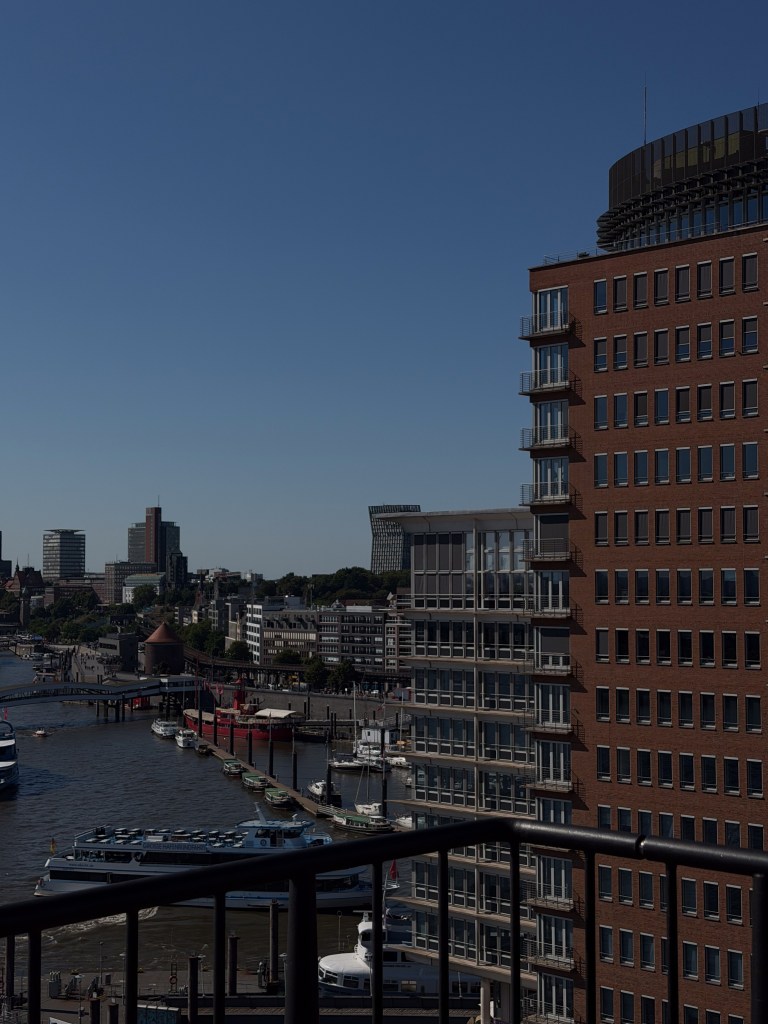
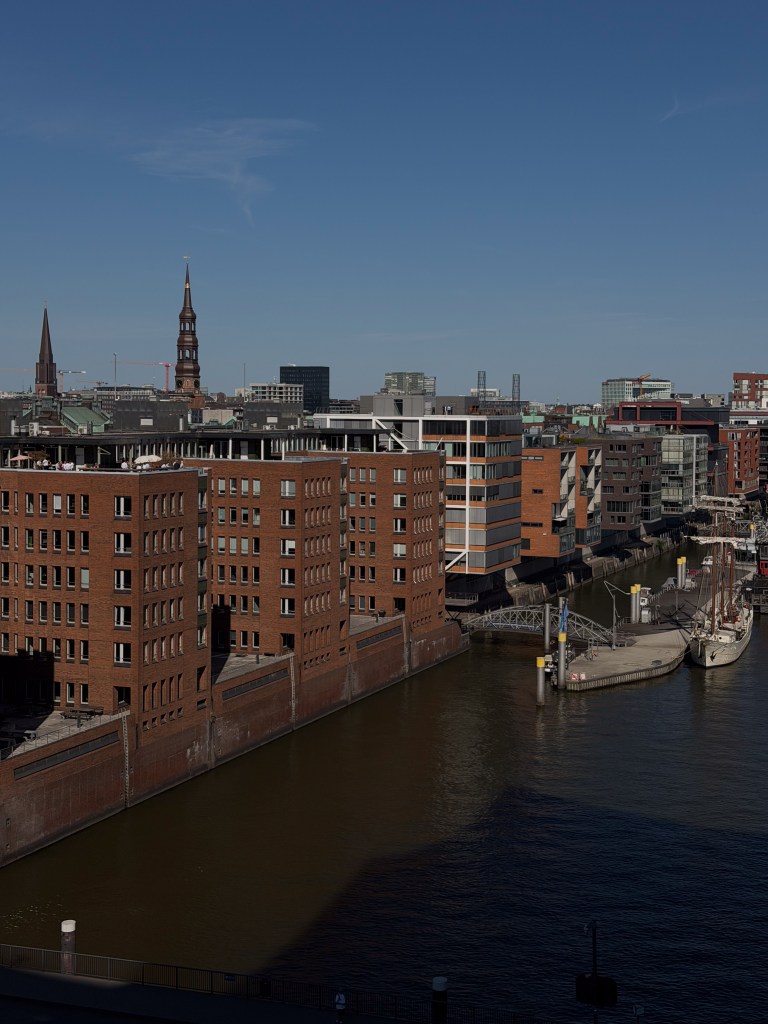
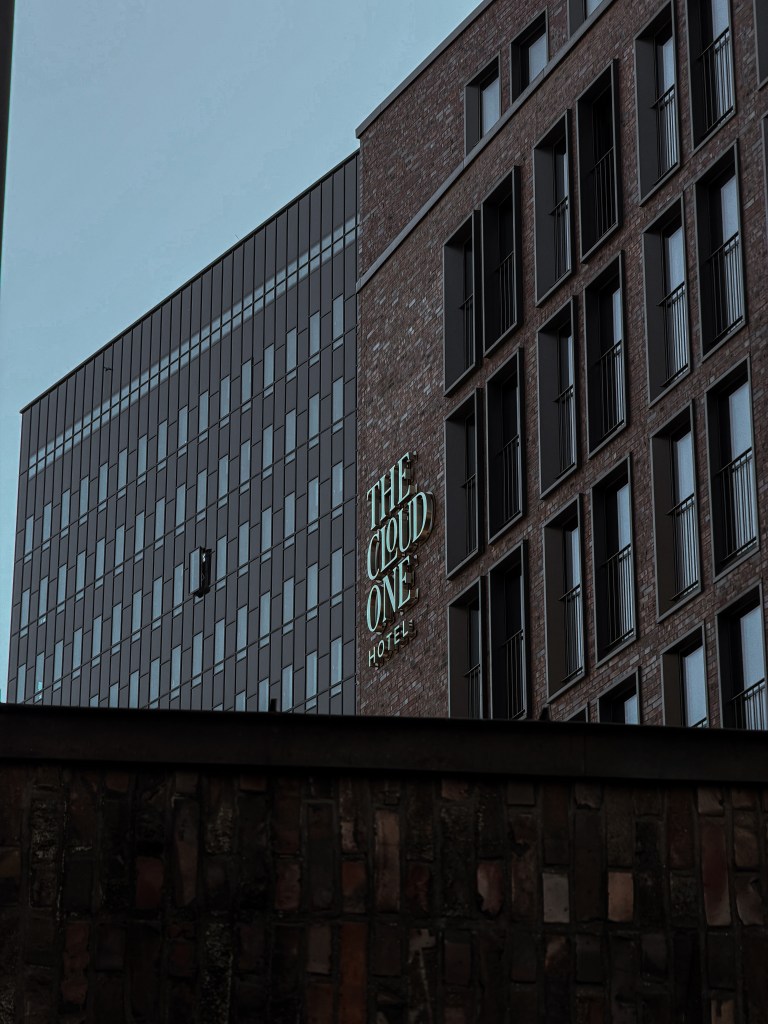
Street details and harbour views shaped my first impression of the city.
Why Hamburg looks like Hamburg
Hamburg grew through trade, shipping and its close relationship with the harbour. This history still shapes the city today. The Speicherstadt was constructed between 1883 and 1927 as a vast warehouse district where goods such as coffee, tea and spices were stored. Its red brick façades, narrow canals, bridges and repeated gables created an architectural identity that still feels unmistakably Hamburg.
What stood out to me most was how strongly the city is defined by its materials. Brick gives the buildings weight, warmth and rhythm, while the water opens up the dense urban fabric. Reflections in the canals constantly change the way the architecture appears, making even the historic warehouses feel connected to movement.
Hamburg also has a beautiful contrast between old and new. The historic Speicherstadt feels solid and detailed, while the nearby HafenCity introduces larger windows, contemporary forms and lighter façades. Instead of competing with the older buildings, much of the modern architecture responds to the harbour through scale, material and views towards the water.
Read more about the history of the Speicherstadt
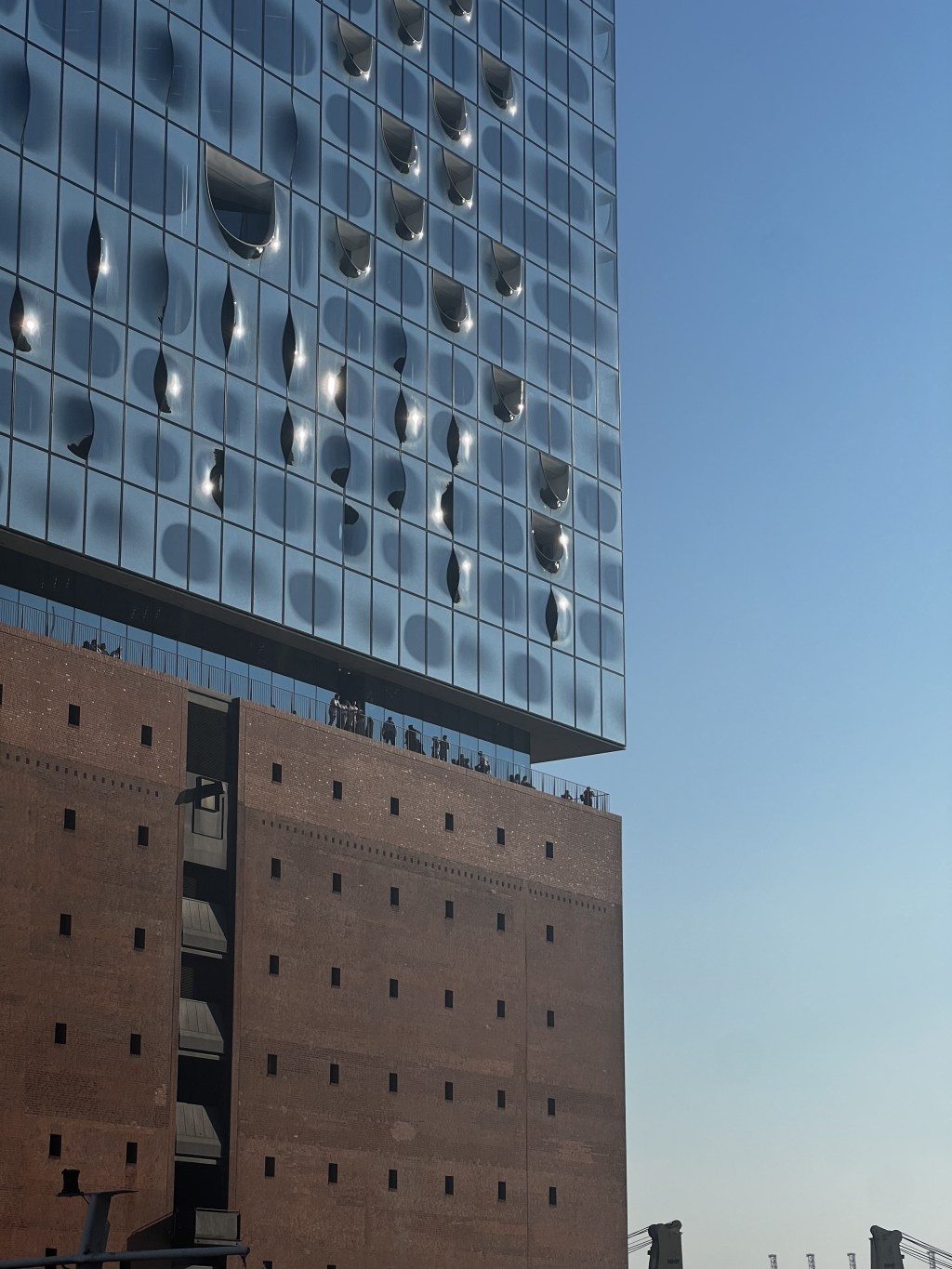
The Elbphilharmonie is probably the clearest example of this relationship. Its glass structure rises above a former brick warehouse, bringing two different periods of Hamburg’s history together in one building. The brick base feels grounded and industrial, while the reflective upper façade changes with the sky and the water.
Walking through Hamburg made me realise that the city does not have one single architectural character. Its identity comes from the combination of brick, glass, water and harbour infrastructure. That layered contrast is exactly what makes Hamburg feel so recognisable.
The Elbphilharmonie: old meets new
The Elbphilharmonie made the strongest architectural impression on me. Designed by Herzog and de Meuron, its glass structure rises directly above the former brick Kaispeicher A. The old warehouse is not hidden or treated like an obstacle. It becomes the base for something completely different.
That relationship makes the building powerful. The heavy brick volume belongs to the industrial harbour. Above it, the curved glass façade changes with the sky and light. Together they create a landmark that could only belong to Hamburg.
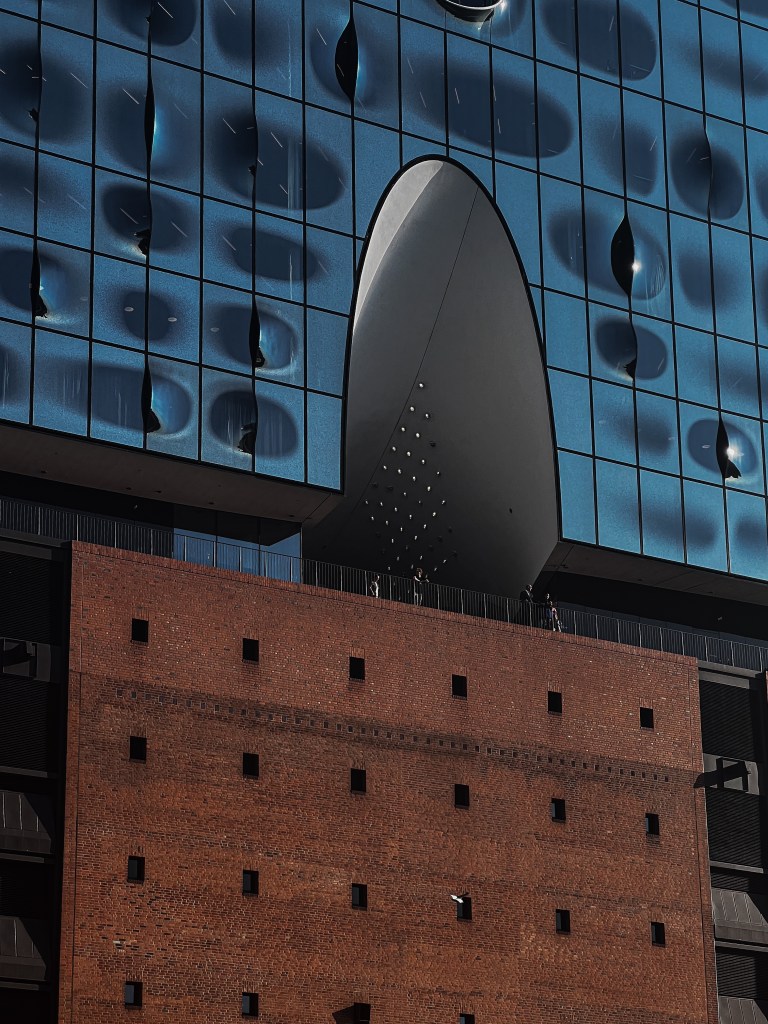
The building does not choose between preservation and reinvention. Its identity comes from allowing both to remain visible.
Inside, the experience became less about the famous silhouette and more about movement, light and changing perspectives. The city, harbour and architecture kept appearing from different angles. A landmark becomes meaningful when the journey through it feels as considered as its exterior.
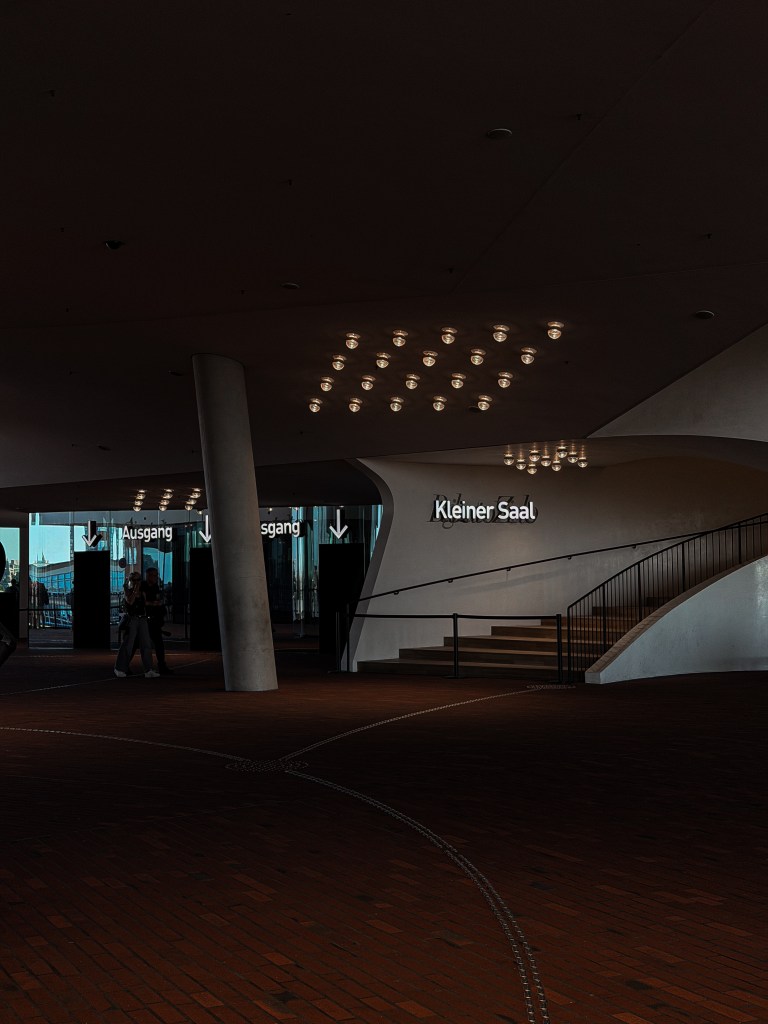
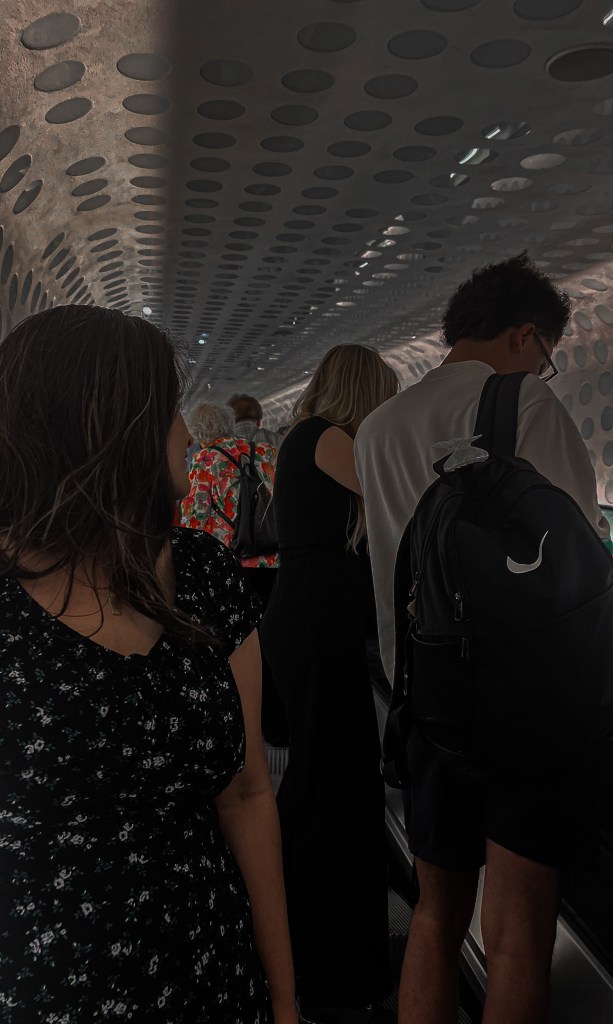
Explore the architecture of the Elbphilharmonie
My first Korean BBQ at Mr. Kao
The day ended with another first: Korean BBQ at Mr. Kao. After spending hours looking at buildings and walking through the city, sitting around the grill changed the pace completely.
What I enjoyed most was how interactive the meal felt. Instead of simply waiting for a finished plate, the experience happened at the table. Grilling, sharing and trying something new made dinner feel like part of the trip rather than just the final stop.

What stayed with me
Hamburg stayed with me because it did not offer only one version of itself. It was historic and modern, monumental and quiet, polished and industrial. The Elbphilharmonie gave the trip its architectural centre, while the streets, harbour views and dinner at Mr. Kao made it personal.
Would you begin with the architecture, the harbour or the food? Tell me what your perfect day in Hamburg would look like.


 Art of Jassi
Leave a comment